
Have you ever paid good money for a musical that skimped on… musicians?
The Lion King has just arrived in Sydney. When it last appeared there, 17 musicians played in the pit. This time: 11. A 35% reduction, alongside a ticket price increase; the missing players replaced by the Orwellian-sounding KeyComp — software that generates orchestral texture at bargain basement prices.
No musicians required.
At the same time, a prominent State Ballet company is proposing to tour interstate with a recorded soundtrack, the originally scored orchestra conspicuously absent.
Far from being anomalies, these are increasingly the norm — in musicals, and creeping into ballet.
I’m currently rehearsing Sir Thomas Allen’s beautiful production of Mozart’s The Marriage of Figaro with the incredible orchestra of Scottish Opera , attuned through years of training and experience to every nuance of singers’ breath, to the opera’s humour, drama, and humanity.
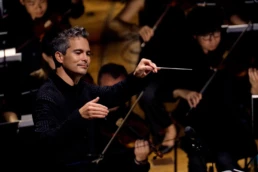
Which makes this a good moment to note what opera and symphonic music still offer: the centuries-old, unambiguously human tradition of dozens — sometimes more than a hundred — musicians playing together in real time. There is nothing quite like the visceral wave when the sonic energy of an orchestra washes over you. It’s not amplified, it’s directional — sound created by one group of humans, travelling through space to reach another.
Worth preserving, especially in a culture that prizes immediacy and efficiency. There’s something genuinely countercultural about assembling some of the world’s most highly-skilled musicians to hone a great work that has been revisited for centuries, each performance revealing new facets of its genius.
That’s what opera champions. And it needn’t be the exclusive preserve of opera.
Across Sydney Harbour right now, Opera Australia is presenting Phantom of the Opera with over 30 live musicians hidden beneath the stage — and it has just broken the record as the highest-grossing Handa Opera season in the event’s 15-year history. Indeed, my own company, State Opera South Australia , presents four completely new productions plus a concert opera this year all with the mighty Adelaide Symphony Orchestra in the pit. The audience knows.
The lesson isn’t complicated: audiences respond to the real thing. The question is whether producers — in musical theatre and beyond — will take note before the last live pit musicians disappear.